

What is gambling?
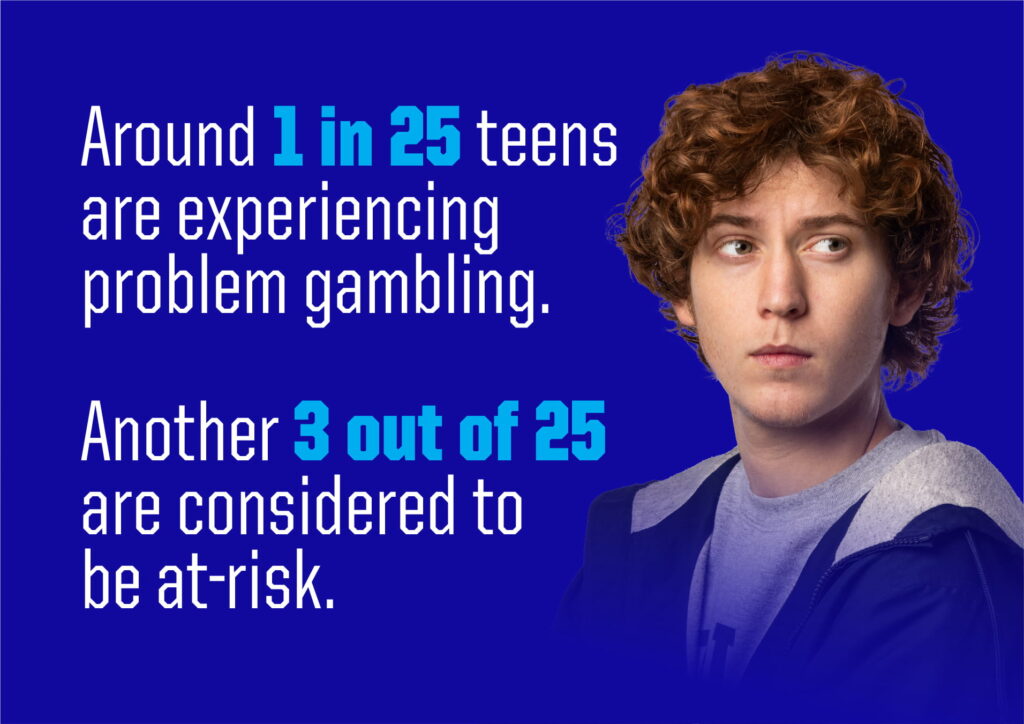
Gambling is when you risk something valuable (usually money) for a chance at a reward. Examples include sports betting, slots, fantasy sports, loot boxes, arcade-style chance games, and even some forms of day trading.
What is problem gambling?
Problem gambling is continued gambling despite causing problems in someone’s life, or continued gambling despite attempts to reduce or stop gambling.
What can go wrong when you gamble underage?
Your brain is growing fast—building skills, learning new things, and shaping your future. Gambling can slow down your goals, create bad money habits, and cause problems that are hard to undo.
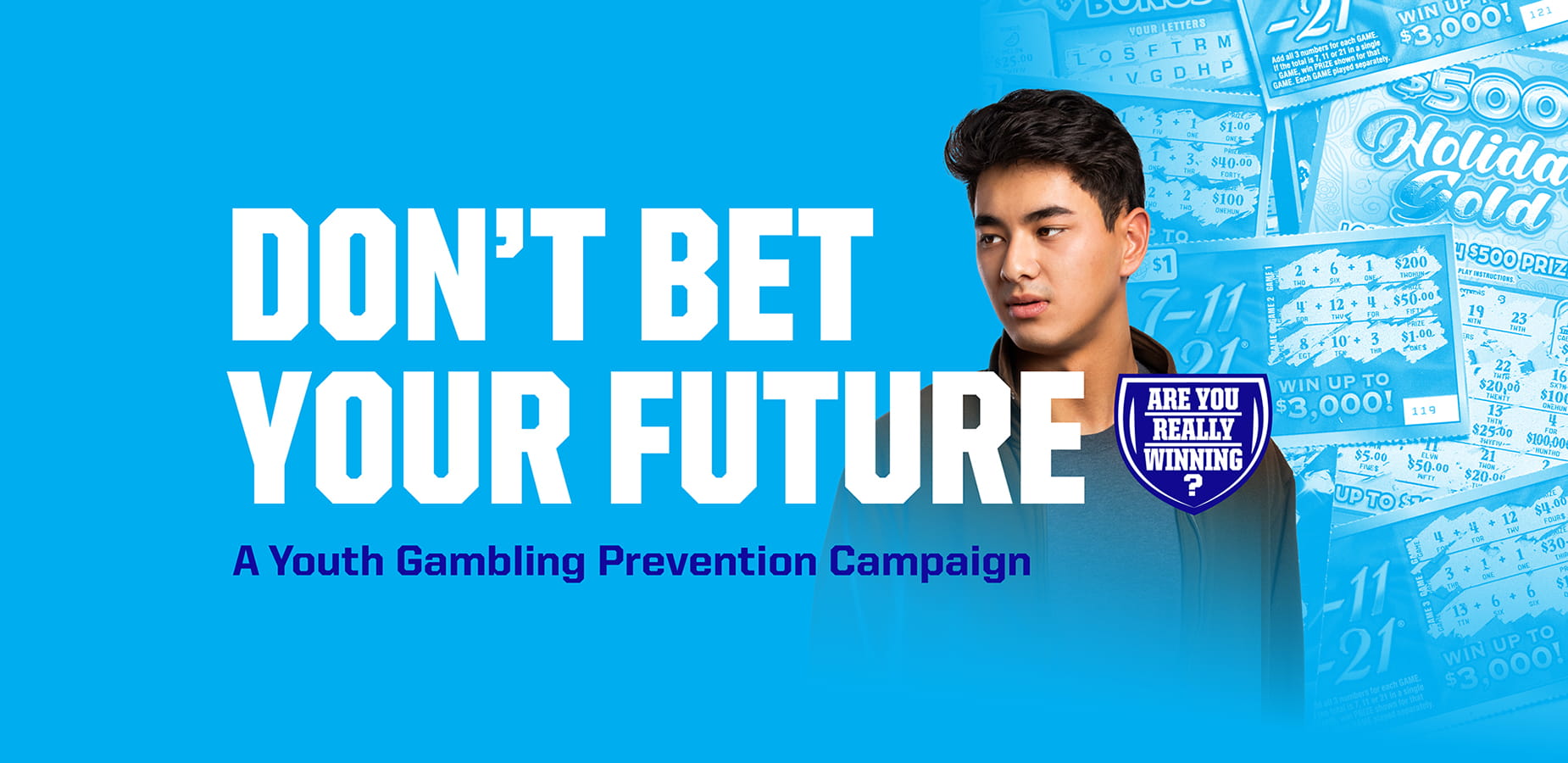
Don’t bet your future.
It is illegal to bet on sports or gamble at a casino before age 21, and illegal to purchase or use
scratch-off tickets before age 18. Sometimes people who struggle with gambling will steal money
or belongings so they can continue to gamble. This can also cause legal concerns.
People who gamble face the risk of losing more money that they can afford to lose, often
collecting debt and losing prized possessions. People who gamble at a young age also risk
building financial habits that will make it harder to manage money in the future.
Someone experiencing gambling harm may find themselves less interested in the things they used
to care about. They might find it hard to focus on anything besides gambling, or feel stressed when
they can’t gamble.
Any mental health concern can lead to struggles with family, friends, or at school. Adults or friends
may seem irritated about the gambling. Sometimes, it can feel like there is a wall up between the
person gambling and the people that care about them.
Gambling can change how your brain processes reward, risk, and self-control. Gambling can
cause the brain to crave the dopamine spikes it provides. That artificial “high” can make teens
more vulnerable to addictive patterns that interfere with their goals, relationships, and future.
Gambling harm can impact our mental health the most. It can make you feel hopeless, guilty, or
embarrassed. These emotions can lead to depression and anxiety, and in some cases can lead to
thoughts of self-harm or suicide.
What are the warning signs of problem gambling?
- Thinking about gambling all the time
- Losing interest in things that are usually exciting
- Talking to family and friends less, spending more time alone
- Feeling irritated, stressed, or down
- Lying to family or friends about your gambling habits
- Family or friends bothered by gambling
- Feeling stressed or upset without access to a phone/ the internet
- Using money for gambling that is meant for other expenses like food
Do you think you or a friend might have a gambling problem?
Click here to take the screener or contact us
Alternatives to gambling
According to other teens, the reasons they gamble include fun, money and finances, connection, skill development, & competition. It is totally normal to want to have fun, compete, or make connections, but we should always make sure we do so in safe ways.
Try these activities instead
Go to a local event, have a movie or tv-night with friends, host a no-stakes board/card game
night, try a new hobby for a day, get some exercise, explore a nearby park or trail.
Babysitting/petsitting, lawn care, summer job, set a savings goal, learn about budgeting,
volunteer somewhere you could see yourself working.
Join a club or team, go to an event or concert, take a class you’re interested in, volunteer locally,
start a group project, host friends for ‘study nights’ or ‘creative time’.
Try a new project, take a class, learn a craft, practice a skill, learn a new language, join a club or
team.
Join a team or club, set a personal goal, enter a skill competition like painting or coding, host a
no-stakes game night, apply for scholarships, have friendly competitions with friends like who
can cook the best cheap meal.
More resources
- Learn about how our brains work: Brain Connections www.BrainConnections.ca
- Find alternative activities that are fun, safe, and exciting: GameQuitters www.GameQuitters.com
- Learn about money and plan for your future: Next Gen Personal Finance www.ngpf.org
Research/Studies
- Estimating the Prevalence of Adolescent Gambling Disorders: A Quantitative Synthesis and Guide Toward Standard Gambling Nomenclature – Shaffer & Hall – https://www.researchgate.net/[…]
- Prevalence Estimates of Adolescent Gambling: A Comparison of the SOGS-RA, DSM-IV-J, and the GA 20 Questions – Derevensky & Gupta – https://link.springer.com/article/10.1023/A:1009485031719
- The Prevalence of Problem Gambling Among U.S. Adolescents and Young Adults: Results from a National Survey – Welte et al – https://pmc.ncbi.nlm.nih.gov/articles/PMC4405098/